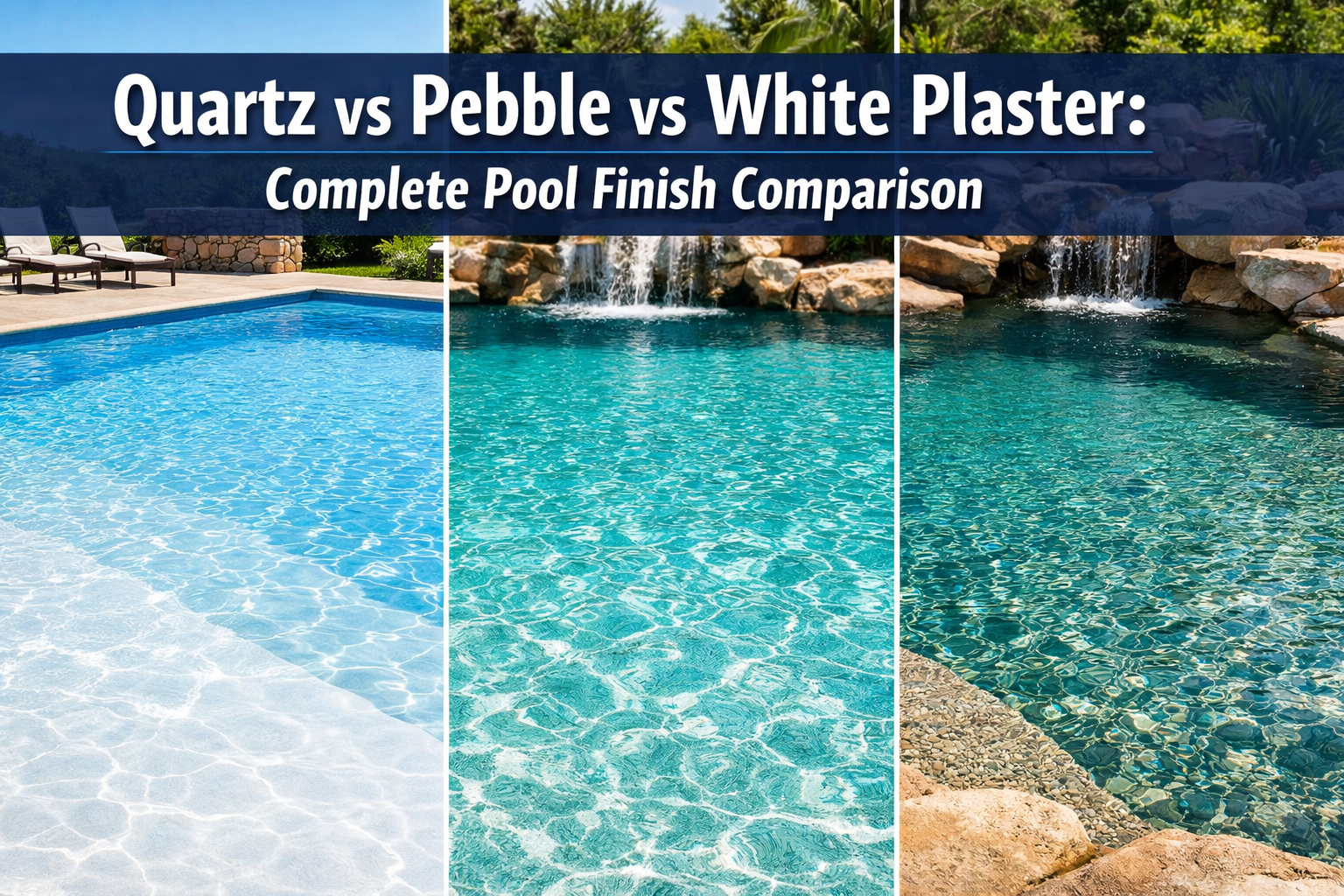
Choosing the right pool finish is one of the most important decisions you’ll make as a pool owner. The surface you select doesn’t just affect how your pool looks—it impacts your maintenance routine, your budget, and how long you’ll enjoy your investment before needing costly resurfacing. When I talk to homeowners about the quartz vs. pebble vs. white plaster comparison, the conversation always comes down to balancing upfront costs against long-term value, comfort against durability, and aesthetics against practicality.
In this comprehensive guide, I’ll walk you through everything you need to know about these three popular pool finishes. Whether you’re building a new pool or resurfacing your existing one, understanding the real differences among quartz, pebble, and white plaster will help you make the smartest choice for your situation.
Key Takeaways 🎯
- White plaster offers the lowest upfront cost and smoothest feel, but requires resurfacing every 10-15 years and is most vulnerable to staining and chemical damage
- Quartz finishes provide a middle-ground solution with a 12-18 year lifespan, wide color options, and better durability than plaster at a moderate price increase
- Pebble finishes deliver the longest lifespan (15-20+ years), superior stain resistance, and best chemical stability, though they cost more initially and have a textured surface
- Total cost of ownership over 20 years often makes pebble the most economical choice despite a higher upfront investment
- Your decision should factor in budget, how long you’ll own the home, texture preferences, and maintenance commitment level
Big-Picture Summary: Understanding Your Pool Finish Options
Before diving into the detailed comparison of quartz vs pebble vs white plaster, let me give you an overview of each finish type.
White Plaster (Marcite): The Traditional Choice
White plaster has been the standard pool finish for decades. It’s a mixture of white cement and marble dust that creates that classic, smooth pool surface most of us grew up with. When you think of a traditional swimming pool with bright blue water, you’re picturing white plaster.
Pros:
- ✅ Lowest upfront cost of all three options
- ✅ Smoothest surface—gentle on feet and skin
- ✅ Classic, timeless appearance
- ✅ Familiar to most pool contractors
Cons:
- ❌ Shortest lifespan (5-10 years typical)
- ❌ Most sensitive to water chemistry imbalances
- ❌ Prone to staining, etching, and discoloration
- ❌ Limited color options
- ❌ Requires strict maintenance to prevent damage
Quartz Finish: The Balanced Middle Ground
Quartz finishes blend white cement with colored quartz aggregates, creating a more durable and visually interesting surface than plain plaster. Think of it as plaster’s upgraded cousin—stronger, prettier, and longer-lasting.
Pros:
- ✅ Mid-range pricing—affordable upgrade from plaster
- ✅ Significantly longer lifespan (12-18 years)
- ✅ Wide variety of colors and sparkle effects
- ✅ Better stain and chemical resistance than plaster
- ✅ Still relatively smooth surface
Cons:
- ❌ More expensive than white plaster initially
- ❌ Not as durable as pebble finishes
- ❌ Slight texture (though minimal)
- ❌ Still requires proper water chemistry maintenance
Pebble Finish: The Premium, Long-Term Solution
Pebble finishes use small, smooth river pebbles mixed with cement to create a natural-looking, highly durable surface. Pebble Tec and similar products have revolutionized pool finishes with their exceptional longevity and resistance to damage.
Pros:
- ✅ Longest lifespan (15-20+ years, sometimes longer)
- ✅ Most resistant to chemicals, staining, and discoloration
- ✅ Best slip resistance for safety
- ✅ Natural, lagoon-like aesthetic
- ✅ Hides dirt and imperfections well
- ✅ Lowest cost-per-year over time
Cons:
- ❌ Highest upfront cost
- ❌ Textured surface (rougher on feet)
- ❌ Requires more frequent brushing
- ❌ Texture intensity varies by pebble size
- ❌ Can be uncomfortable for extended sitting
Side-by-Side Comparison: Quartz vs Pebble vs White Plaster
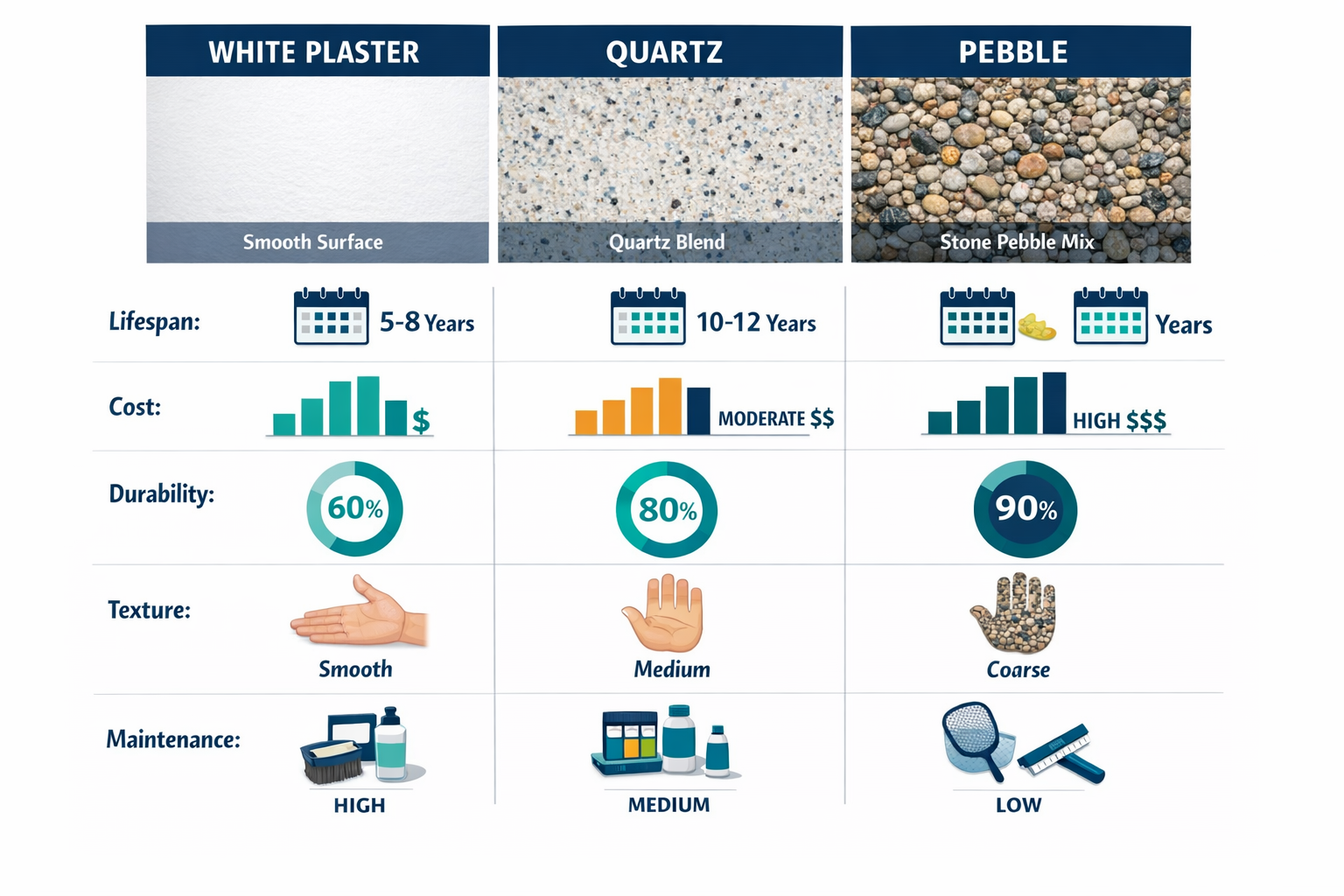
To make your decision easier, I’ve compiled this comprehensive comparison table based on industry data and real-world performance [1]:
| Factor | White Plaster (Marcite) | Quartz Finish | Pebble Finish |
|---|---|---|---|
| Typical Lifespan | 5–10 years with good care | 12–18 years typical | 15–20+ years typical |
| Upfront Cost (per sq ft) | $3–$6 (lowest) | $5–$9 (mid-range) | $6–$10+ (highest) |
| Surface Feel | Very smooth, most comfortable | Smooth with slight texture | Noticeably textured; varies by pebble size |
| Slip Resistance | Lowest when wet | Moderate slip resistance | Best traction and grip |
| Chemical Sensitivity | Most sensitive; etches easily | Moderate sensitivity | Least sensitive; very stable |
| Stain Resistance | Most prone to staining | Good stain resistance | Best stain resistance |
| Color Options | Limited (white, light blue, gray) | Very wide range with sparkle | Natural colors via pebble selection |
| Water Appearance | Classic bright blue | Vibrant, customizable | Natural lagoon-like |
| Maintenance Pattern | Standard brushing, frequent replaster | Standard brushing, less frequent resurfacing | More brushing needed, longest resurface interval |
| Best For | Lowest budget, short-term ownership | Balanced budget vs. durability | Long-term homes, heavy use, durability priority |
This table shows why the quartz vs pebble vs white plaster comparison isn’t just about picking the “best” option—it’s about finding the right fit for your specific needs and circumstances.
Detailed Analysis: Breaking Down Each Pool Finish
White Plaster: When Budget Takes Priority
White plaster remains popular for one simple reason: cost. If you’re working with a tight budget or don’t plan to keep your home long-term, white plaster can make financial sense.
The Real Cost of White Plaster
While the initial installation costs $3-$6 per square foot (roughly $3,000-$6,000 for an average pool), you’ll need to budget for resurfacing every 7-10 years. Over a 20-year period, you might resurface 2-3 times, bringing your total cost to $9,000-$18,000 or more [2].
Maintenance Demands
White plaster is unforgiving when it comes to water chemistry. Let your pH drift too high, and you’ll see etching. Allow metals in the water, and you’ll get stains. If you forget to brush regularly, algae will embed in the porous surface.
I always tell homeowners: if you choose white plaster, you’re committing to being diligent about pool maintenance. That means:
- Testing water chemistry 2-3 times weekly
- Maintaining pH between 7.4 and 7.6
- Keeping calcium hardness balanced
- Brushing the entire pool weekly
- Addressing stains immediately
When White Plaster Makes Sense
Choose white plaster if:
- You’re on a strict budget and need the lowest upfront cost
- You plan to sell your home within 5-7 years
- You love the classic, smooth pool feel
- You’re committed to meticulous water chemistry management
- You prefer the traditional bright blue water appearance
Quartz Finish: The Goldilocks Option
Quartz finishes have become increasingly popular because they offer a sweet spot between cost and performance. When homeowners ask me about the quartz vs pebble vs white plaster comparison, I often steer them toward quartz if they want durability without the premium price tag.
What Makes Quartz Different
The quartz crystals mixed into the cement create a harder, more stain-resistant surface than plain plaster. These aggregates also reflect light beautifully, giving your pool water that sparkling, jewel-like quality you see in high-end pools.
Color Versatility
One of quartz’s biggest advantages is color flexibility. You can choose from dozens of colors—from Caribbean blues to tropical greens to neutral grays—allowing you to create the exact aesthetic you want. Many manufacturers offer color samples so you can see exactly how your pool will look [3].
Long-Term Value Proposition
At $5-$9 per square foot initially (about $5,000-$9,000 for an average pool), quartz costs more upfront than plaster. However, with a 12-18-year lifespan, you’ll likely only need one resurfacing over 20 years, rather than two or three, potentially saving thousands in the long run.
When Quartz Makes Sense
Choose quartz if:
- You want better durability than plaster without pebble’s premium cost
- Color customization is important to you
- You prefer a smoother surface than pebble provides
- You’re willing to invest moderately for longer-lasting results
- You want that sparkling, high-end pool appearance
For those interested in professional pool resurfacing services, quartz often represents the best balance of investment and return.
Pebble Finish: The Premium Long-Term Investment
Pebble finishes represent the top tier of pool surfaces, and for good reason. While the upfront cost makes some homeowners hesitate, the long-term economics often work in pebble’s favor.
Unmatched Durability
The natural pebbles used in these finishes are incredibly resistant to chemical damage, staining, and wear. Where white plaster might show etching from slightly imbalanced pH, pebble surfaces remain largely unaffected. This chemical stability means less stress about perfect water chemistry and fewer emergency calls to your pool service [4].
The Texture Trade-Off
Here’s the honest truth: pebble finishes feel noticeably textured compared to plaster or quartz. The degree of texture depends on pebble size:
- Mini pebbles: Smallest size, smoothest pebble option, closer to quartz feel
- Standard pebbles: Medium texture, most common choice
- Large pebbles: Most textured, strongest visual impact
Some people love the natural feel; others find it uncomfortable for sitting on pool steps or benches. I always recommend feeling sample boards in person before committing.
Safety Benefits
That texture isn’t just a trade-off—it’s also a safety feature. Pebble finishes provide excellent slip resistance, making them ideal for:
- Families with children
- Pools with shallow play areas
- Homes with elderly residents
- Commercial or rental properties where liability matters
The Cost-Per-Year Advantage
Yes, pebble costs $6-$10+ per square foot initially (about $6,000-$10,000+ for an average pool). But with a 15-20+ year lifespan, your cost-per-year is often lower than plaster:
- White plaster: $9,000-$18,000 over 20 years = $450-$900/year
- Quartz: $10,000-$18,000 over 20 years = $500-$900/year
- Pebble: $6,000-$10,000 over 20 years = $300-$500/year
When Pebble Makes Sense
Choose pebble if:
- You plan to stay in your home 10+ years
- You want maximum durability and lowest maintenance stress
- Slip resistance and safety are priorities
- You love the natural, resort-style aesthetic
- You can afford a higher upfront cost for long-term savings
- You don’t mind textured surfaces
Many homeowners working with professional pool services in Corona, CA, find that pebble finishes reduce their maintenance costs and hassles over time.
How to Choose Between Quartz, Pebble, and White Plaster
Making the right choice in this quartz vs pebble vs white plaster comparison comes down to asking yourself the right questions. Let me walk you through my decision framework.
Question 1: What’s Your Budget Reality?
Be honest about both your upfront budget and your long-term financial picture.
If you have $3,000-$5,000 available:
White plaster is likely your only option initially. Just budget for resurfacing in 7-10 years.
If you have $5,000-$8,000 available:
Quartz becomes accessible and offers significantly better value over time than stretching to barely afford pebble.
If you have $8,000-$12,000+ available:
Pebble is worth serious consideration for its superior longevity and lowest cost-per-year.
Question 2: How Long Will You Own This Home?
Your ownership timeline dramatically affects which finish makes financial sense.
Selling within 5 years:
White plaster makes sense—you’ll likely sell before needing resurfacing, and you won’t recoup premium finish costs in resale value.
Staying 5-10 years:
Quartz hits the sweet spot—you’ll enjoy the benefits without needing to resurface, and it adds appeal for buyers.
Staying 10+ years:
Pebble becomes the smart choice—you’ll enjoy the full lifespan and lowest total cost of ownership.
Question 3: What’s Your Maintenance Commitment Level?
Be realistic about how much time and attention you’ll dedicate to pool care.
Low maintenance commitment:
Choose a pebble. Its chemical tolerance means less stress about perfect water balance, and its stain resistance hides minor issues.
Moderate maintenance commitment:
Quartz works well. It requires proper care but forgives occasional lapses better than white plaster.
High maintenance commitment:
If you’re meticulous about water chemistry and enjoy pool care, white plaster can work—but why not invest that effort into a more durable finish?
Consider exploring energy-efficient pool maintenance strategies to reduce overall pool operating costs regardless of finish choice.
Question 4: How Important Is Surface Feel?
This is highly personal and is often overlooked in the quartz vs. pebble vs. white plaster comparison.
Smooth feel is essential:
White plaster offers the smoothest surface, with quartz a close second. If you have young children who spend hours sitting on steps or you frequently lounge in shallow areas, smooth matters.
Texture doesn’t bother you:
Pebble becomes viable. Many people actually prefer the natural feel, and mini pebble options minimize texture concerns.
Safety outweighs comfort:
Pebble’s slip resistance makes it the clear winner, especially for families with elderly members or young children.
Question 5: What Aesthetic Do You Want?
Your pool’s appearance affects your entire outdoor space.
Classic, timeless look:
White plaster delivers that traditional bright blue water everyone recognizes.
Customized, vibrant appearance:
Quartz offers the widest color palette and that coveted sparkle effect. Perfect for creating a specific design vision.
Natural, resort-style feel:
Pebble creates that lagoon-like, organic appearance that mimics natural swimming holes and high-end resort pools.
Making Your Final Decision: A Personalized Approach
Let me share how I’d approach this decision based on common homeowner profiles:
Profile 1: The Budget-Conscious First-Time Pool Owner
Situation: Limited budget, uncertain about long-term plans, want a functional pool without breaking the bank.
Recommendation: White plaster
Start with white plaster to minimize upfront costs. Commit to excellent water chemistry maintenance using resources from professional pool maintenance services. When resurfacing becomes necessary in 7-10 years, you’ll have more financial flexibility and better knowledge of what you want in a finish.
Profile 2: The Growing Family in Their Forever Home
Situation: Plan to stay 15+ years, have young children, moderate budget, want low-maintenance solution.
Recommendation: Pebble finish
The higher upfront cost pays off through longevity, safety (slip resistance), and reduced maintenance stress. Over 15-20 years, pebble will likely cost less than multiple plaster resurfacings while providing superior performance. Consider mini pebble for a smoother feel if texture concerns you.
Profile 3: The Design-Focused Homeowner
Situation: Mid-range budget, strong aesthetic preferences, want a custom look, staying 7-12 years.
Recommendation: Quartz finish
Quartz delivers the color customization and sparkle you want without pebble’s premium cost. You’ll enjoy enhanced durability and appearance throughout your ownership, and the upgraded finish adds appeal when you sell. Work with experienced pool plaster professionals to select the perfect color.
Profile 4: The Hands-Off Pool Owner
Situation: Busy lifestyle, want minimal maintenance hassle, willing to invest for convenience.
Recommendation: Pebble finish
Pebble’s chemical tolerance and stain resistance mean fewer maintenance emergencies and less stress about perfect water balance. Combined with modern pool automation, you can enjoy your pool with minimal hands-on involvement.
Beyond the Finish: Other Factors to Consider
The quartz vs pebble vs white plaster comparison doesn’t exist in isolation. Consider these additional factors:
Water Chemistry and Maintenance
Regardless of finish choice, proper water chemistry remains important. However, the tolerance for imperfection varies dramatically:
- White plaster: Requires near-perfect chemistry to avoid damage
- Quartz: Tolerates minor chemistry fluctuations reasonably well
- Pebble: Most forgiving of chemistry variations
If you’re using salt water pool systems, all three finishes work, but pebble’s durability shines in salt environments.
Climate Considerations
Your local climate affects finish performance:
Hot, sunny climates: UV exposure and evaporation stress all finish. Pebble’s superior durability helps it withstand harsh conditions better.
Cold climates with freeze-thaw cycles: Pebble’s density makes it most resistant to freeze-thaw damage, though proper winterization matters more than finish choice.
High-mineral-content water: If your fill water contains high levels of calcium or other metals, pebble’s stain resistance becomes especially valuable.
Pool Usage Patterns
How you use your pool should influence your choice:
Heavy use (daily swimming, parties, kids): Pebble’s durability justifies the investment.
Moderate use (weekends, occasional entertaining): Quartz offers good durability without premium cost.
Light use (occasional dips, mostly aesthetic): White plaster’s lower cost makes sense if the pool is more decorative than functional.
Resurfacing Timing and Planning
When planning pool resurfacing projects, consider:
- Season: Most resurfacing happens in spring or fall when pool usage is lower
- Curing time: All finishes need proper curing (28 days for full cure)
- Contractor availability: Quality contractors book months ahead during peak season
- Budget timing: Plan financially for resurfacing well before your current finish fails
Common Mistakes to Avoid
Having seen countless pool finish decisions, here are mistakes I urge you to avoid:
Mistake 1: Choosing Based Only on Initial Cost
The cheapest upfront option often ends up costing more over time. Always calculate the total cost of ownership over your expected timeframe.
Mistake 2: Ignoring Texture Preferences
Visit pools with different finishes in person. Sit on the steps, walk on the surfaces, and really feel the difference. Don’t rely solely on pictures or descriptions.
Mistake 3: Underestimating Maintenance Commitment
Be honest about your willingness to maintain perfect water chemistry. If you know you’ll be lax about testing and balancing, choose a more forgiving finish (quartz or pebble) rather than setting yourself up for premature failure with white plaster.
Mistake 4: Skipping Professional Consultation
While this guide provides comprehensive information, your specific pool, water source, and local conditions matter. Consult with experienced pool professionals who can assess your unique situation.
Mistake 5: Focusing Only on Aesthetics
Yes, your pool should look beautiful, but durability, maintenance, and safety matter more for long-term satisfaction. A gorgeous finish that requires constant maintenance or needs to be replaced in five years won’t make you happy.
The Verdict: Which Pool Finish Should You Choose?
After this comprehensive quartz vs pebble vs white plaster comparison, here’s my bottom-line recommendation framework:
Choose white plaster if:
- Budget is your primary constraint
- You’re selling within 5-7 years
- You’re committed to meticulous maintenance
- You love the classic smooth feel and bright blue water
Choose quartz if:
- You want balanced cost vs. performance
- Color customization matters to you
- You prefer smoother surfaces but want better durability than plaster
- You’re staying 7-15 years
- You want that sparkly, high-end appearance
Choose pebble if:
- You’re in your forever home (10+ years)
- Durability and low maintenance are priorities
- Safety and slip resistance matter
- You can afford a higher upfront cost for long-term savings
- You love natural, resort-style aesthetics
- Texture doesn’t bother you (or you choose mini pebble)
For most homeowners planning to stay long-term, pebble offers the best overall value despite a higher initial cost. For those with shorter timelines or tighter budgets, quartz provides an excellent middle ground. White plaster remains viable for specific situations but represents the highest-maintenance, shortest-lived option.
Conclusion: Making the Right Choice for Your Pool
The decision between quartz, pebble, and white plaster isn’t about finding a universal “best” option—it’s about identifying the right fit for your budget, timeline, preferences, and lifestyle. This quartz vs pebble vs white plaster comparison has equipped you with the knowledge to make an informed choice.
Remember these key principles:
- Think long-term: Calculate total cost of ownership over your expected timeframe, not just initial investment
- Be honest about maintenance: Choose a finish that matches your realistic commitment level
- Prioritize what matters: Decide whether feel, appearance, durability, or cost matters most to you
- Experience before deciding: See and feel actual pool finishes before committing
- Consult professionals: Work with experienced contractors who can assess your specific situation
Your Next Steps 🎯
Ready to move forward with your pool finish decision? Here’s what to do next:
- Assess your budget: Determine what you can comfortably invest both initially and over 10-20 years
- Visit local pools: Ask friends, neighbors, or your pool service provider to see different finishes in person
- Get multiple quotes: Contact at least three reputable contractors for estimates on your preferred finish
- Review contractor credentials: Check licenses, insurance, references, and portfolios of previous work
- Plan your timeline: Schedule resurfacing during your pool’s off-season for minimal disruption
Whether you’re building a new pool or planning a resurfacing project, taking time to make the right finish choice will pay dividends in satisfaction, beauty, and value for years to come.
Your pool is a significant investment in your home and lifestyle. Choose the finish that will help you enjoy it to the fullest while fitting your practical needs and financial reality. With the insights from this comprehensive comparison, you’re now prepared to make that choice confidently.
For professional guidance on pool finishes and resurfacing in your area, explore expert pool plaster services or consult experienced pool maintenance professionals for personalized recommendations tailored to your pool and circumstances.
References
[1] National Plasterers Council. (2024). “Pool Finish Comparison and Longevity Study.” Industry Standards Report.
[2] Pool & Spa News. (2025). “Pool Resurfacing Costs and Trends Analysis.” Annual Industry Survey.
[3] American Society of Pool Professionals. (2025). “Pool Finish Materials: Performance and Durability Comparison.” Technical Bulletin.
[4] Aquatic Facility Training & Consultants. (2024). “Chemical Resistance of Pool Surface Materials.” Research White Paper.