Imagine diving into your pool on a scorching summer day, only to notice rough patches, stubborn stains, or a faded finish that’s lost its luster. The truth is, your pool’s plaster isn’t just about looks—it’s the protective barrier between your pool’s structure and thousands of gallons of chemically treated water. As a pool owner, understanding the main types of pool plaster available in 2026 can save you thousands of dollars and years of frustration.
Whether you’re building a new pool, planning a renovation, or simply wondering when it’s time to resurface your existing pool, choosing the right plaster finish is one of the most important decisions you’ll make. From budget-friendly traditional marcite to premium pebble finishes that can last two decades, each type of pool plaster offers distinct advantages and trade-offs.
Key Takeaways
✅ Traditional white plaster (marcite) remains the most affordable option but typically lasts only 5-10 years and is more prone to staining and etching
✅ Quartz and aggregate finishes offer superior durability and chemical resistance, extending your pool’s lifespan to 12-20 years while providing enhanced aesthetic appeal
✅ Exposed aggregate and pebble finishes have now surpassed traditional plaster in sales due to their exceptional durability, stain resistance, and natural beauty
✅ Premium finishes like glass bead and polished aggregate provide the ultimate in chemical resistance and visual appeal but come at a higher initial cost
✅ Your choice should balance your budget, desired texture (smooth vs. textured), aesthetic preferences, and how long you plan to keep your pool
Understanding Pool Plaster Basics
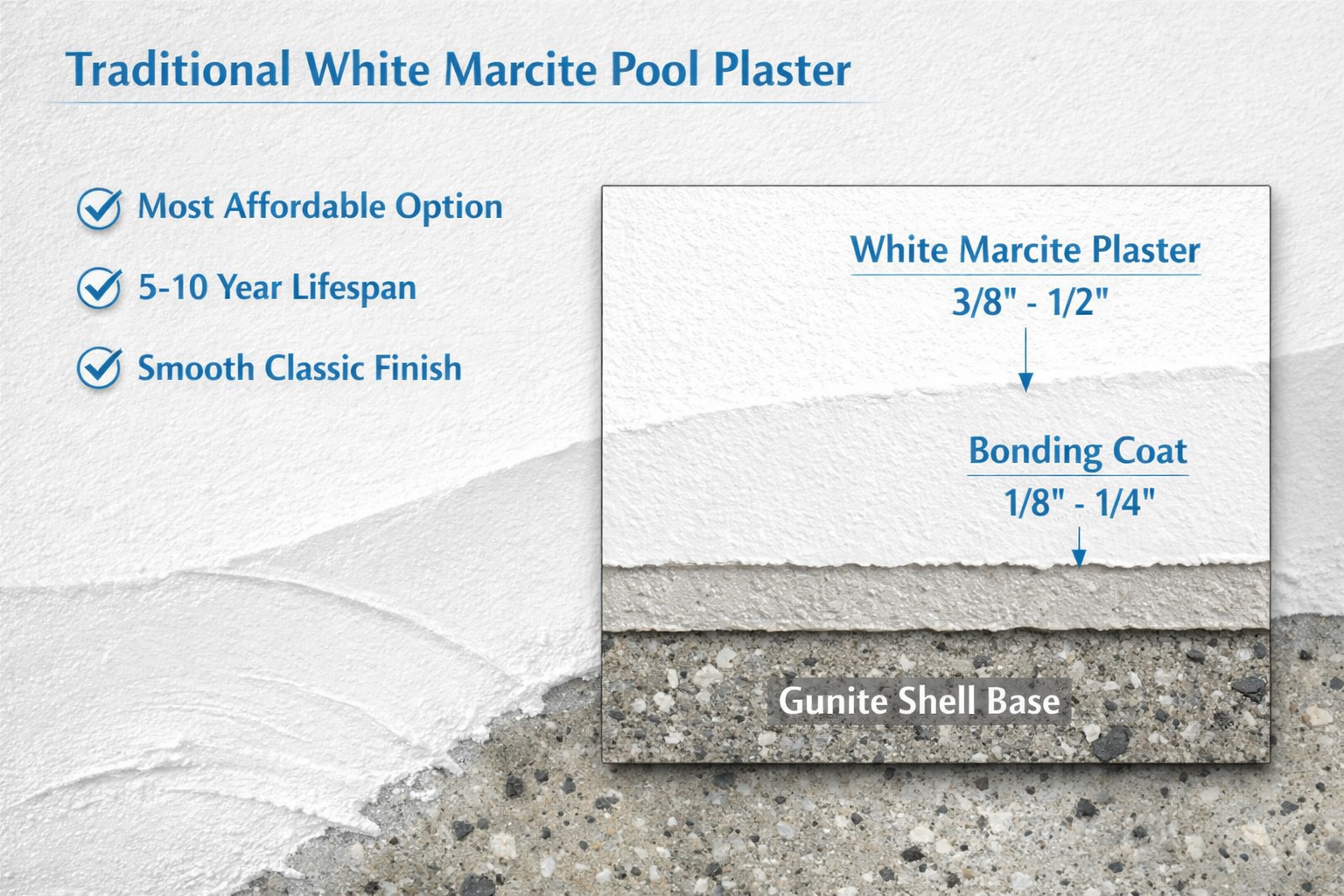
Before diving into the specific types, let’s establish what pool plaster actually is. Pool plaster serves as the waterproof finish layer applied over your pool’s structural shell (typically gunite or shotcrete). This finish layer does three critical jobs:
- Creates a watertight seal preventing water from penetrating the structural shell
- Provides a smooth, attractive surface for swimmers
- Protects the underlying structure from chemical damage and erosion
The plaster layer is typically 3/8 to 1/2 inch thick and is applied by skilled craftsmen who trowel the material onto the pool surface. The quality of installation matters just as much as the material itself—even premium plaster can fail prematurely if poorly applied.
Standard White Plaster (Marcite): The Classic Choice
White plaster, also known as marcite, represents the original and most traditional pool finish. This time-tested material has been the industry standard for decades, and for good reason.
What Is White Plaster Made Of?
Traditional white pool plaster consists of a simple but effective mixture:
- White Portland cement (the binding agent)
- Marble dust or silica sand (the aggregate)
- Water (for workability)
This combination creates a smooth, bright white finish that gives pools their classic, clean appearance[2][3].
Advantages of White Plaster
💰 Most Affordable Option: White plaster typically costs 30-50% less than premium alternatives like quartz or pebble finishes[3]. For budget-conscious pool owners, this significant cost difference makes white plaster an attractive entry point.
🎨 Timeless Aesthetic: The bright white finish creates a classic pool look that never goes out of style. It also makes your pool water appear bright blue and inviting.
🔧 Widely Available: Since it’s been the industry standard for so long, virtually every pool contractor knows how to properly install white plaster, and materials are readily available everywhere.
Disadvantages of White Plaster
⏱️ Shorter Lifespan: Standard white plaster typically lasts only 5-10 years with proper maintenance[2][5]. This means you’ll need to budget for resurfacing more frequently than with premium finishes.
🔍 More Susceptible to Imperfections: White plaster is more prone to visible staining, etching, and mottling than other types[2][5]. Chemical imbalances, metals in the water, and organic materials can all leave permanent marks.
💧 Requires Diligent Maintenance: To maximize lifespan, white plaster demands careful attention to water chemistry. Even small deviations can cause problems.
Is White Plaster Right for You?
White plaster makes sense if you’re working with a tight budget, planning to sell your home within 5-10 years, or simply prefer the traditional pool aesthetic. However, if you’re planning long-term ownership, the frequent resurfacing costs may actually make premium finishes more economical over time.
For professional guidance on maintaining your white plaster finish, consider working with experienced pool service professionals.
Colored Plaster: Customization Meets Tradition
Colored plaster takes the basic white plaster formula and adds pigments to create customized hues that can dramatically change your pool’s appearance.
How Colored Plaster Works
The manufacturing process is straightforward: pigments are added to the standard white plaster mix during preparation. The most popular colors in 2026 include:
- French Gray (creates a sophisticated, modern look)
- Federal Blue (produces deeper, more vibrant water color)
- Aqua tones (enhance the tropical resort feel)
- Black (creates a dramatic, mirror-like effect)
These are the most requested color options among homeowners looking to personalize their pools[1].
Benefits of Colored Plaster
🎨 Enhanced Aesthetics: Colored plaster allows you to customize your pool’s appearance to match your landscape design, home exterior, or personal preferences.
💎 Water Color Transformation: The plaster color directly affects how your water appears. Darker plasters create deeper blue or even green water tones, while lighter colors maintain the bright blue appearance.
💰 Similar Cost to White: Colored plaster typically costs only slightly more than standard white plaster, making it an affordable upgrade.
Drawbacks of Colored Plaster
🌞 Color Fading: Over time, exposure to sunlight and pool chemicals can cause colors to fade or mottle somewhat[1]. This is particularly noticeable with darker colors.
🔄 Inconsistent Appearance: Some colored plasters can develop mottling (uneven color distribution) as they age, especially if water chemistry isn’t carefully maintained.
⏱️ Similar Lifespan to White: Colored plaster generally has the same 5-10 year lifespan as white plaster, as the pigments don’t significantly improve durability.
Making the Most of Colored Plaster
If you choose colored plaster, work with experienced installers who understand proper mixing and application techniques. Consistent mixing is crucial to avoid color variations. Additionally, maintain balanced water chemistry religiously to preserve the color as long as possible.
Quartz Plaster: The Durability Upgrade
Quartz plaster represents a significant step up in durability and longevity compared to traditional plaster finishes. This enhanced pool plaster option has become increasingly popular among homeowners who want better performance without the full cost of pebble finishes.
What Makes Quartz Plaster Different?
Quartz plaster incorporates quartz aggregate or ceramic-coated sand into the traditional plaster mix. Popular brand names include Diamond Brite, QuartzScapes, and similar products. The quartz crystals are much harder than marble dust, creating a more resilient surface[1].
Advantages of Quartz Finishes
💪 Superior Durability: Quartz plaster typically lasts 7-15 years, significantly longer than standard plaster. The harder quartz aggregate resists wear and chemical deterioration better than marble dust.
✨ Sparkling Appearance: The quartz crystals catch and reflect light, creating an attractive sparkling effect that adds visual interest to your pool surface.
🛡️ Better Stain Resistance: The denser surface created by quartz aggregate is more resistant to staining from metals, minerals, and organic materials.
🧪 Chemical Resistance: Quartz plaster is more resistant to chemical deterioration, meaning water chemistry imbalances are less likely to cause permanent damage[1].
Considerations with Quartz Plaster
💵 Higher Initial Cost: Quartz finishes cost more than standard plaster, though still less than premium pebble or glass bead options.
🖐️ Slightly Rougher Texture: While still relatively smooth, quartz plaster has a slightly more textured feel than traditional plaster due to the aggregate particles.
Quartz Plaster Performance Enhancers
Some quartz plaster products incorporate additional performance-enhancing additives:
Pozzolans are additives that improve plaster performance by locking up calcium hydroxide, which helps prevent etching and mottling. This extends the plaster lifespan without changing its color or texture[1].
Silicone Shield is another additive used to waterproof pool plaster by reducing staining, chemical deterioration, and water solubility to extend durability[1].
These additives can significantly improve the long-term performance of your quartz plaster finish.
Exposed Aggregate and Pebble Finishes: Premium Durability
Exposed aggregate finishes, including popular pebble finishes like Pebble Tec, represent the premium tier of pool plaster options. These finishes have revolutionized the pool industry and now actually outsell traditional plaster due to their superior performance characteristics[5].
What Are Exposed Aggregate Finishes?
Exposed aggregate pool plaster contains small pebbles, stones, glass beads, quartz, or ceramic-coated crystals combined with cement-based pigmented plaster. After application, the surface is treated (typically with a mild acid wash) to expose the aggregate, revealing the natural beauty of the stones[5].
Popular product lines include:
- Pebble Tec (the original and most recognized brand)
- Pebble Sheen (smaller, smoother pebbles)
- Pebble Fina (the finest pebble option)
- River Rok (natural river rock appearance)
Why Pebble Finishes Have Become So Popular
🏆 Exceptional Durability: Exposed aggregate finishes can last 15-20 years or more with proper care[5], potentially double or triple the lifespan of standard plaster.
🛡️ Superior Stain Resistance: The non-porous nature of the stones makes these finishes highly resistant to staining from metals, minerals, and organic materials[5].
🧪 Outstanding Chemical Resistance: Pebble finishes are much more forgiving of water chemistry fluctuations than traditional plaster[1].
🌈 Natural Beauty: The variety of natural stone colors creates a unique, organic appearance that many homeowners find more visually appealing than solid-colored plaster.
🎨 Extensive Color Options: Manufacturers offer dozens of color blends, from bright tropical blues to earthy neutrals to dramatic dark tones.
Considerations with Pebble Finishes
💰 Highest Initial Cost: Pebble finishes are the most expensive plaster option, sometimes costing 2-3 times more than standard white plaster.
🖐️ Textured Surface: The exposed pebbles create a bumpy, textured surface that some swimmers find less comfortable than smooth plaster, particularly for activities like sitting on pool steps or benches.
🦶 Potential for Roughness: Depending on the specific product and pebble size, some finishes can feel rough on bare feet, though finer options like Pebble Sheen minimize this issue.
The Long-Term Value Proposition
While pebble finishes require a significant upfront investment, the math often works in their favor over time. Consider this example:
Standard White Plaster:
- Initial cost: $5,000
- Lifespan: 7 years
- Cost over 21 years: $15,000 (three resurfacing jobs)
Pebble Finish:
- Initial cost: $10,000
- Lifespan: 21 years
- Cost over 21 years: $10,000 (one installation)
For homeowners planning long-term ownership, pebble finishes often prove more economical while providing superior aesthetics and performance throughout their lifespan.
If you’re considering a pebble finish for your pool resurfacing project, working with experienced installers is crucial to achieving optimal results.
Glass Bead and Beadcrete Finishes: The Premium Alternative
Glass bead finishes represent an innovative approach to pool plaster that offers unique benefits, particularly in terms of aesthetics and chemical resistance.
What Is Beadcrete?
Beadcrete is an Australian-made pool plaster product that uses tiny glass beads set in polymer-modified mortar. This creates a highly reflective, slip-resistant surface that’s more chemically resistant than traditional marcite or marble dust plaster[1].
Advantages of Glass Bead Finishes
✨ Exceptional Reflectivity: The glass beads create stunning light reflection effects, making your pool water appear to shimmer and sparkle with remarkable depth and brilliance.
🛡️ Superior Chemical Resistance: The glass beads and polymer-modified mortar are highly resistant to chemical damage, extending the finish’s lifespan.
🦶 Slip-Resistant Safety: Despite being smooth to the touch, glass bead finishes provide excellent slip resistance, enhancing safety around pool steps and shallow areas.
🎨 Unique Aesthetic: The luminous quality of glass bead finishes creates a distinctive, upscale appearance that stands apart from traditional plaster or pebble finishes.
Considerations with Glass Bead Finishes
💰 Premium Pricing: Glass bead finishes fall into the premium price category, similar to or sometimes exceeding pebble finish costs.
🔍 Limited Availability: These finishes are less common than traditional plaster or pebble options, so you may need to search for qualified installers in your area.
📚 Less Track Record: Compared to decades-old technologies like white plaster or even pebble finishes, glass bead products have a shorter performance history in the North American market.
Polished Aggregate Finishes: Smooth Meets Durable
Polished aggregate finishes offer a compelling middle ground between the smooth feel of traditional plaster and the durability of exposed aggregate finishes.
How Polished Aggregate Differs
Unlike exposed aggregate finishes where the stones protrude from the surface, polished aggregate contains fine crushings of stones such as marble, granite, or quartz that are polished smooth rather than exposed[5]. This creates a surface that feels smooth to the touch while still benefiting from the durability of aggregate materials.
Benefits of Polished Aggregate
🖐️ Smooth Texture: Polished finishes feel much smoother than exposed pebble finishes, addressing the primary complaint some swimmers have about textured surfaces.
⏱️ Extended Lifespan: These finishes can extend plaster life to 12-20 years[5], significantly longer than traditional plaster.
🎨 Upscale Appearance: The polished finish creates a sophisticated, high-end look that appeals to homeowners seeking premium aesthetics.
💪 Improved Durability: While not quite as durable as exposed aggregate, polished finishes still offer substantially better performance than standard plaster.
Polished Aggregate Considerations
💵 Premium Pricing: Polished aggregate finishes typically cost more than standard or quartz plaster, though pricing varies by specific product and installer.
🔧 Installation Expertise Required: Achieving a properly polished finish requires skilled craftsmen with specific training and experience.
Choosing the Right Pool Plaster for Your Needs
With so many options available, how do you choose the right pool plaster for your specific situation? Let me walk you through the key decision factors.
Budget Considerations
Your budget is often the primary determining factor:
| Budget Level | Best Options | Expected Lifespan |
|---|---|---|
| Economy | White plaster, colored plaster | 5-10 years |
| Mid-Range | Quartz plaster with additives | 7-15 years |
| Premium | Pebble finishes, glass bead, polished aggregate | 12-20+ years |
Remember to consider the total cost of ownership, not just initial installation costs. A premium finish that lasts 20 years may actually cost less over time than repeatedly resurfacing with cheaper materials.
Texture Preferences
Consider how you use your pool:
Choose smooth finishes (white, colored, quartz, or polished aggregate) if you:
- Have young children who sit and play in shallow areas
- Frequently sit on pool steps or benches
- Prefer the traditional smooth pool feel
- Have concerns about rough surfaces
Consider textured finishes (pebble, exposed aggregate) if you:
- Prioritize durability and longevity over texture
- Love the natural, organic aesthetic
- Want maximum stain and chemical resistance
- Don’t mind the slightly bumpy feel
Aesthetic Goals
Your pool should complement your overall landscape and home design:
- Traditional/Classic homes: White or light-colored plaster maintains timeless appeal
- Modern/Contemporary homes: Dark colors, polished aggregate, or glass bead finishes create sophisticated looks
- Tropical/Resort-style landscapes: Pebble finishes in aqua or Caribbean blue tones enhance the vacation vibe
- Natural/Organic designs: Earth-toned pebble finishes blend beautifully with natural landscaping
Maintenance Commitment
Be honest about your willingness to maintain proper water chemistry:
High maintenance commitment: Standard white or colored plaster can work if you’re diligent about water chemistry and regular pool maintenance.
Moderate maintenance commitment: Quartz plaster offers more forgiveness while still requiring regular attention.
Lower maintenance preference: Pebble and premium aggregate finishes are most forgiving of occasional chemistry imbalances, though proper maintenance still extends their lifespan.
Long-Term Plans
Consider your timeline:
Selling within 5-7 years: Standard plaster provides good return on investment without over-improving.
Keeping pool 10-15 years: Quartz or mid-range aggregate finishes offer the best balance of cost and performance.
Long-term ownership (15+ years): Premium pebble or polished aggregate finishes provide the best long-term value despite higher upfront costs.
Installation and Maintenance Best Practices
Regardless of which type of pool plaster you choose, proper installation and maintenance are crucial to achieving maximum lifespan and performance.
Professional Installation Matters
Pool plastering is a skilled trade that requires experience and expertise. Even the best materials will fail prematurely if poorly installed. When selecting a contractor:
✅ Verify credentials and licensing: Ensure your contractor is properly licensed and insured
✅ Check references: Ask to see recent projects and speak with previous clients
✅ Understand the process: A quality contractor will explain their preparation, application, and curing procedures
✅ Get detailed warranties: Understand what’s covered and for how long
Working with experienced pool plastering professionals ensures your investment is protected.
Critical First 30 Days
The curing period immediately after plaster installation is crucial:
- Follow startup procedures exactly: Your contractor should provide detailed instructions for the first 30 days
- Brush daily: Brushing the entire pool surface daily helps remove plaster dust and prevents mottling
- Monitor chemistry closely: Maintain balanced water chemistry from day one
- Avoid aggressive chemicals: Don’t shock or add harsh chemicals during the initial curing period
Long-Term Maintenance
To maximize your plaster’s lifespan:
🧪 Maintain balanced water chemistry: Test and adjust pH, alkalinity, calcium hardness, and sanitizer levels regularly
🧹 Brush weekly: Regular brushing prevents algae growth and removes debris before it can stain
💧 Monitor water level: Maintain proper water level to ensure adequate circulation and filtration
🔧 Address problems promptly: Fix leaks, repair equipment issues, and treat stains quickly before they become permanent
For comprehensive maintenance support, consider partnering with professional pool service providers who can help protect your plaster investment.
The Future of Pool Plaster Technology
The pool plaster industry continues to innovate, with several exciting trends emerging in 2026:
Eco-Friendly Formulations
Manufacturers are developing more environmentally sustainable plaster formulations that reduce water consumption during application and incorporate recycled materials without sacrificing performance.
Enhanced Additives
New additive technologies continue to improve plaster durability, stain resistance, and color stability. These innovations are making even standard plaster formulations more durable than ever before.
Smart Integration
Some newer finishes are being developed with properties that work better with smart pool systems, including surfaces that resist scaling from salt water chlorination systems and finishes optimized for automated chemical management systems.
Hybrid Products
Manufacturers are creating hybrid products that combine the best characteristics of different finish types, such as the smooth feel of traditional plaster with the durability of aggregate finishes.
Conclusion: Making Your Pool Plaster Decision
Choosing the right pool plaster is a significant decision that will affect your pool’s appearance, performance, and maintenance requirements for years to come. Let’s recap the main types:
Standard white plaster offers the most affordable entry point with a classic look but requires resurfacing every 5-10 years and demands careful maintenance.
Colored plaster provides customization at a modest price increase while maintaining similar durability to white plaster.
Quartz plaster delivers a meaningful upgrade in durability and chemical resistance with an attractive sparkling finish, lasting 7-15 years.
Exposed aggregate and pebble finishes represent the premium tier, offering exceptional durability (15-20+ years), superior stain and chemical resistance, and natural beauty, though at a higher initial cost and with a textured surface.
Glass bead and polished aggregate finishes provide unique aesthetic qualities and excellent performance for homeowners seeking distinctive, upscale appearances.
Your Next Steps
- Assess your budget: Determine both your upfront budget and long-term cost tolerance
- Evaluate your priorities: Decide what matters most—cost, texture, appearance, or longevity
- Research local contractors: Find experienced, reputable pool plastering professionals in your area
- Request multiple quotes: Get detailed proposals from at least three qualified contractors
- Ask questions: Understand exactly what materials, processes, and warranties each contractor offers
- Plan timing carefully: Schedule your resurfacing during optimal weather conditions for your region
Remember, there’s no single “best” pool plaster—only the best choice for your specific needs, budget, and preferences. Whether you choose economical white plaster or premium pebble finishes, proper installation and diligent maintenance will help you get the maximum lifespan and enjoyment from your investment.
Your pool is likely one of your home’s most valuable features and a source of countless memories with family and friends. Choosing the right plaster finish ensures it remains beautiful, functional, and inviting for years to come.
Ready to take the next step? Visit our pool plaster services page to learn more about your options and connect with experienced professionals who can help transform your pool.
References
[1] Pool plaster types and additives technical specifications, industry manufacturer data
[2] Traditional white pool plaster composition and performance characteristics, pool construction standards
[3] Pool finish cost comparison analysis, pool industry pricing data 2026
[5] Aggregate pool finish market trends and performance data, pool industry research